DDGs/Ethanol
-
Aflatoxin B1, B2, G1, G2
Aflatoxin, a toxin from a naturally occurring mold, is a Group 1 carcinogen proven to cause cancer in humans.
-
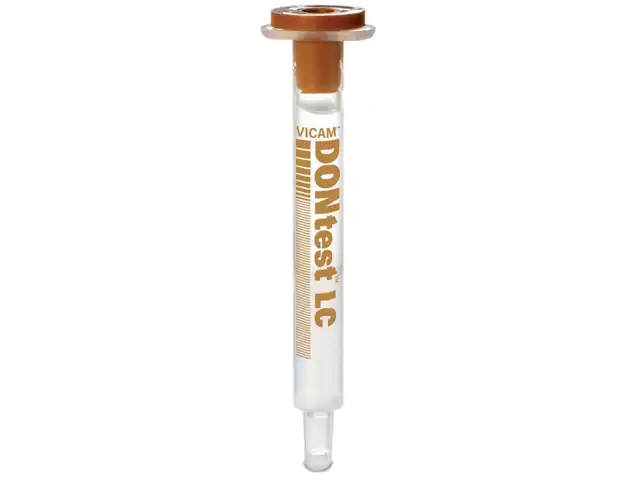
Deoxynivalenol
Deoxynivalenol (DON) is also known as vomitoxin because of its impact on livestock through interference with animal growth and acceptance of feed. DON has been implicated in moldy corn toxicosis of swine. DON is often present with other mycotoxins and has been isolated from grains and feeds throughout the world at levels as high as 92 ppm. Because of concerns about DON, the United States FDA has instituted advisory levels of 1 ppm for wheat products for human consumption, 5 ppm for grain products for most animal feeds and 10 ppm for grain products for cattle feed. The European Community has regulations for DON levels that range from less than 0.2 ppm in processed cereal based foods for infants and young children to less than 1.75 ppm for unprocessed wheat.
-
Fumonisins B1, B2, B3
Fumonisins are mycotoxins produced by the fungus Fusarium moniliforme. F. moniliforme is a frequent, almost universal, inhabitant of corn. Fumonisin B1, B2 and B3 are present in most corn samples tested, often totaling greater than 1 ppm. Fumonisin is thought to cause equine leukoencephalomalacia in horses, swine pulmonary edema, and human esophageal cancer. The FDA/USDA Working Group on Fumonisin advises less than 4 ppm fpr products for human consumption, less than 5 mg/kg in horse feed, less than 10 mg/kg for swine feed, and less than 50 mg/kg for cattle feed
-
Ochratoxin A
Ochratoxin is a mycotoxin produced by the fungus Aspergillus ochraceous and also by several species of Penicillium fungi. Ochratoxin has been known to cause kidney damage and decreased egg production in chickens. It is an immunosuppressant and is considered a potential carcinogen.
-
T-2/HT-2
T-2 and HT-2 mycotoxins are produced by Fusarium and other mold species that can commonly attack grains and can grow at temperatures from slightly above freezing to about 86°F (30°C). All domestic animals are susceptible to injury by dietary intake of T-2 in the range of a few ppm. In poultry, feed contaminated with 1.0 to 3.5 ppm of T- 2 has produced lesions at the edges of the beaks, abnormal feathering in chicks, a drastic and sudden drop in egg production, eggs with thin shells, reduced weight gains, and mortality.
-
Zearalenone
Zearalenone is an estrogenic mycotoxin produced by the fungus Fusarium graminearum. Zearalenone induces feminization in animals at concentrations in feed of about 1 ppm. Higher concentrations (50-100 ppm) can interfere with conception, ovulation, implantation, fetal development, and the viability of newborn animals.